
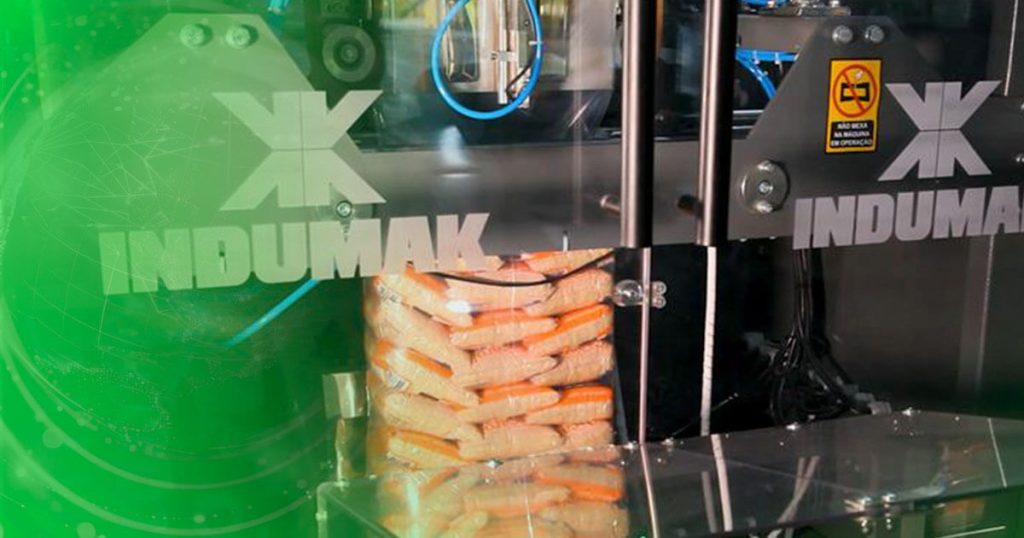
Categoria: Packaging
Product packaging: understand what it is and why it matters
Product packaging is one of the critical points in the industry. When it fails, waste, logistics costs, and the number of dissatisfied customers tend to increase.
However, in today’s dynamic environment, the need for efficiency and sustainability in this operation is growing.
In other words, how products are packaged is not just a detail—it is now a strategy that cannot be neglected.
In this guide, you will understand what product packaging involves and learn about the main types.
You will also see how automation, led by innovative companies, is the safest way to reduce losses, increase productivity, and ensure quality in the industrial process.
What is product packaging?
It is the set of processes that ensures an item’s integrity, quality, and safety from production to the end consumer.
It is not just about placing a product in its respective packaging. The focus is on protecting it against a range of potential issues:
- Impacts from drops;
- Contamination by foreign materials;
- Temperature and humidity variations;
- Other external conditions.
Proper packaging also affects other critical points: logistics, operational costs, brand perception, and even the customer’s purchase decision.
Poorly executed procedures lead to rework, financial losses, and damage to the company’s image. On the other hand, when well planned, they add value to the product.
But did you know there are different types of packaging? We will discuss them next.
The 3 Strategic Types of Product Packaging
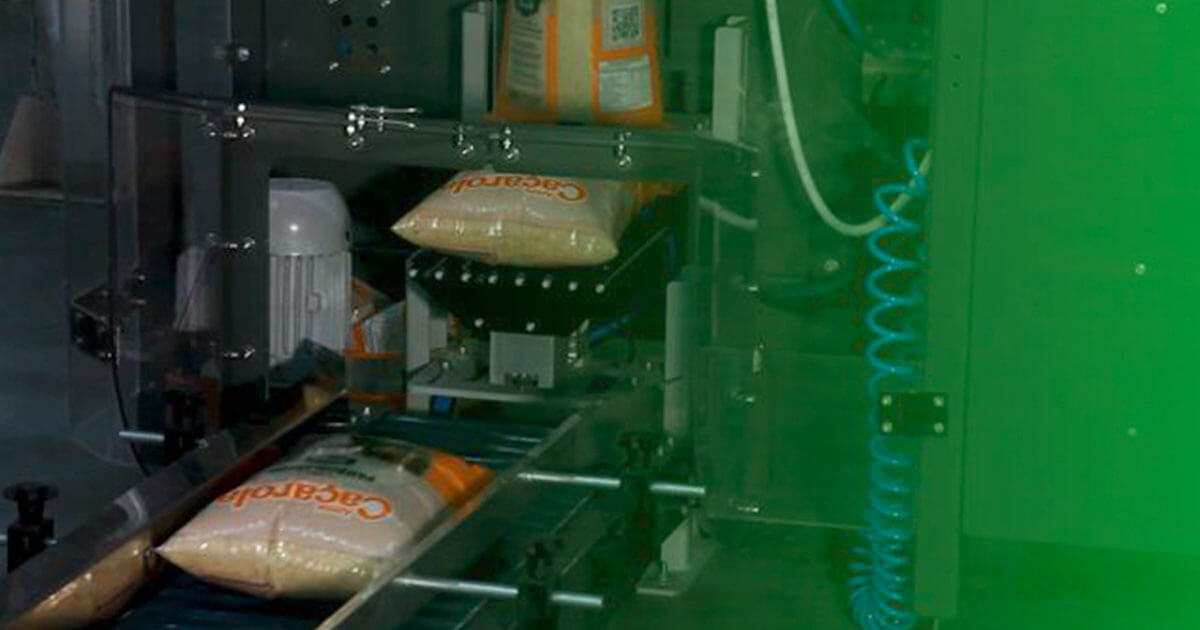
As seen, packaging is essentially how goods are arranged for storage and transportation.
The packaging itself is the most important part of physical protection, preserving the product’s ideal characteristics and making it presentable to consumers.
According to an MDI article, packaging also plays a role in marketing and brand building. However, it points out that not all packaging is created equal.
There are significant differences between types and materials that help protect and transport goods.
For complete protection, packaging consists of layers that complement each other (primary, secondary, tertiary, etc.).
Understanding each layer is essential for designing efficient processes and selecting the right packaging machines.
1. Primary Packaging: Direct Contact with the Product
This is the layer that directly surrounds the product. Its purpose is to protect and preserve, ensuring hygiene, mandatory information, and usability for the consumer.
Examples: cookie packets, water bottles, soda cans.
2. Secondary Packaging: Responsible for Grouping
Used to group multiple primary packages, providing extra protection, ease of transport, and even brand reinforcement.
Examples: cardboard boxes or plastic film bundles.
3. Tertiary Packaging: Protects Large Groups
Responsible for consolidating large volumes for transport and storage.
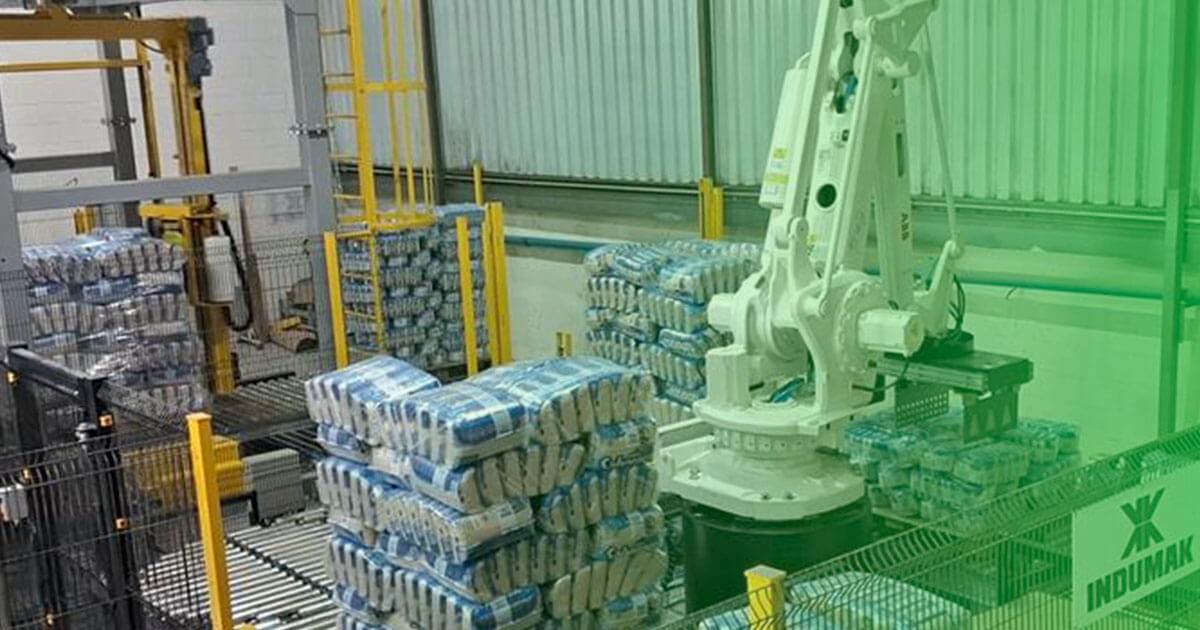
It includes pallets, stretch film, and strapping systems, which ensure safety during movement and logistical efficiency, often using palletizing system technology.
There is also the possibility of using quaternary and quinary packaging:
- Quaternary: Moves large quantities of tertiary packages, such as pallets.
- Quinary: Allows long-distance transport, like containers used for international shipments.
Proper integration of these levels is crucial to reduce failures and maintain competitiveness.
Packaging in Industry Goes Beyond Protection
With the advancement of Industry 4.0, packaging can no longer be limited to simply protecting the product.
Today, packaging is much more than avoiding risks; its main focus should be to:
- Reduce waste;
- Improve logistical efficiency;
- Enhance brand value in the eyes of the customer.
In other words, treating packaging merely as a legal requirement can result in a loss of competitiveness.
But what are the other benefits? Let’s take a closer look.
Waste Reduction
Failures lead to breakages, damage during transport, and returns. This results in significant financial losses and a high environmental impact.
Accurate and well-planned packaging, on the other hand, minimizes losses and contributes to sustainability goals.
Efficiency in Industrial Packaging Processes
Standardization and precision across all packaging levels prevent rework, reduce costs, and accelerate production flow.
Logistical Optimization
Well-designed packaging facilitates stacking, improving space utilization in trucks and warehouses, and reducing costs.
In summary, packaging is not just about packing—it’s about doing it the right way and investing in competitiveness.
How is this achieved? Through automation! We’ll cover this next.
Automation is the Key: Transform Industrial Packaging with the Best Machines!
A major driver of the Fourth Industrial Revolution, automation involves replacing human labor with machines that deliver greater precision, speed, and efficiency.
Its role has evolved as new challenges arise, especially with advances in components and technology.
In practice, automation represents the transition from traditional, failure-prone processes to high-performance operations.
The main goal is to eliminate bottlenecks in manual processes—recurring errors, slowdowns, and lack of standardization—while providing numerous benefits:
Speed and Productivity
Automated machines operate in continuous cycles, packaging, grouping, and palletizing thousands of units per hour.
This ensures that the production line does not need to stop for manual tasks.
Consistent Standardization and Quality
All packages are produced with the same sealing, weight, and closure standards, preventing common errors.
Reduced Waste
Precise control of material usage (film, cardboard, stretch wrap, etc.) results in direct cost savings and reduced environmental impact.
Operational Safety
Machines reduce repetitive physical effort, lowering the risk of accidents when handling heavy loads.
Logistical Efficiency
Automated processes create stable loads, optimizing space in transport and storage.
Standardized grouping (bundling and boxing) speeds up loading and unloading operations.
Scalability
Indumak machines provide operational flexibility through configurable work recipes. This feature allows adjusting production parameters such as speed, dosing, and format according to demand.
The result is greater flexibility without increasing fixed labor costs.
Traceability and Control
Many machines integrate with management systems (ERP/MES), allowing real-time monitoring of production volumes.
This facilitates audits, reporting, and quality control.
Return on Investment (ROI)
The return is fast: fewer errors, less waste, reduced labor, and increased productivity. What was once a “cost” becomes a strategic investment.
In this context, Indumak is a reference in complete solutions for packaging, bundling, and palletizing.
The investment delivers concrete benefits:
- Higher packages per minute (ppm) without quality loss.
- Standardized production with no human errors.
- Controlled processes reduce accidents and failures.
- Transparency in production monitoring.
Automating packaging gives industry the ability to meet growing demands without compromising profit margins.
Overcome Your Challenges with Indumak Technologies
In general, the industry faces similar challenges:
- Low productivity.
- High material waste.
- Lack of standardization.
- High labor costs.
Indumak addresses each of these points with specific solutions:
- Packaging Machines: precision, efficient and high-quality sealing, and speed in primary packaging, preserving the product.
- Baling Machines: group and standardize secondary packages, providing protection and efficiency in storage and transport.
- Palletizing Machines: fast, safe, and optimized operation, maximizing space and reducing logistical costs.
Indumak delivers more than just machines. Our goal is integration, support, and know-how—something few companies in the market can offer with the same expertise.
We understand your challenges and provide automation solutions capable of transforming production lines into safer, more efficient processes.
Take the next step toward excellence: speak with our specialists and discover the Indumak solutions that can transform your company.
Much More Than Equipment and Products: Technology and Quality for Your Industry!
You will also enjoy
- Conect




© 2026 - Indumak Indústria de Máquinas Kreis Ltda - Todos os direitos reservados.
