
Categoria: Packaging
How to calculate product density?
Two packages with the same size and shape may have different weights. The reason is quite simple: the product density inside these packages is not the same.
Properly understanding this characteristic helps ensure consistency, efficiency, and standardization in the packaging process.
To support this analysis, this article provides a density calculator. In it, you can enter weight and volume values to obtain the result instantly.
Throughout the content, you will learn how to interpret this data and apply it correctly in industrial packaging processes.
What is product density?
It is the relationship between its mass and the volume it occupies. In other words, different materials—even with the same weight—occupy different volumes.
This variation directly affects factors such as dosing, packaging type, and the adjustments required in the equipment.
The table below illustrates some products and their respective densities.
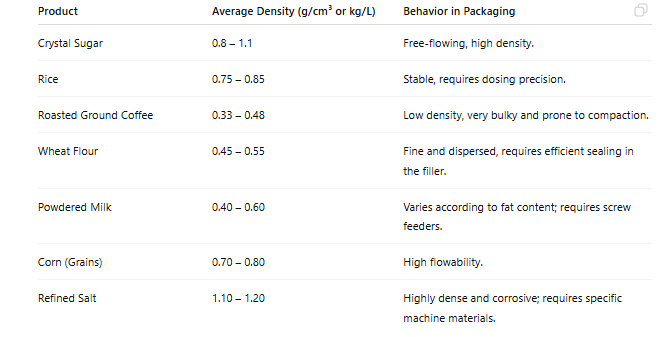
Note: The values are for reference only and may vary depending on particle size, moisture content, temperature, and the brand or supplier.
Therefore, accurate calculation helps to understand the real behavior of the material during the packaging process.
How to calculate product density
To calculate the density of industrial products, a densimeter or pycnometer is used. This device measures the relationship between mass and volume.
Depending on the material being analyzed, the container may be made of glass—more common for liquids—or metal, which is recommended for pasty products and materials with greater consistency.
Today, digital densimeters are also available, which speed up the process and increase the reliability of the results.
The procedure is simple: the analyst places the product in the appropriate densimeter, subtracts the container’s tare weight, and performs the weighing.
Next, the following relationship is applied to obtain the corresponding value:
Density = Mass ÷ Volume
In other words, the mass of the product is divided by the volume it occupies. It is important to note that temperature, humidity, and formulation variations can influence the result, requiring careful attention.
This method can be applied to liquids, grains, powders, or pasty products, as long as the measurement conditions are standardized and accurately represent the operational reality.
To make the calculation easier, use the calculator below.
industrial density calculator
enter the mass and volume below to automatically calculate the product's density.
the calculated density is:
0.00 * ensure your units are consistent (e.g., g/ml, g/cm³, or kg/l)If you need to convert your mass and volume values, use the calculator below:
industrial unit converter
convert your mass or volume values before calculating density.
mass conversion
volume conversion
Why does product density vary on the production line?
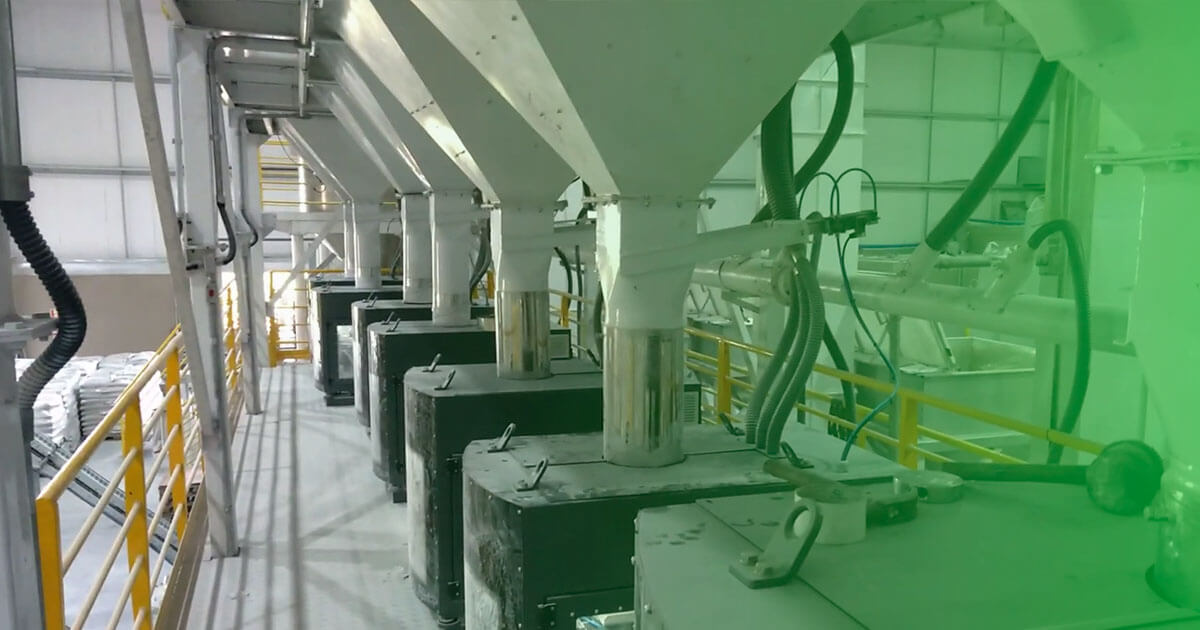
Not every product behaves the same way. Density varies according to the physical state and the characteristics of the material.
For grains and particulate solids, for example, the so-called bulk density is considered.
It is influenced by several factors:
- Particle size
- How the particles settle
- Moisture content
These variations directly affect dosing systems, such as Gravimetric Fillers, which operate based on the actual weight of the material.
Creams, doughs, and viscous materials, on the other hand, show variations associated with their consistency.
Therefore, small changes in the process can alter the occupied volume, requiring frequent adjustments in both the systems and the packaging process.
Relationship between density and quality control
Density is a technical indicator of process stability. When this value deviates from the expected standard, it is a sign that something has changed in production.
Some practical examples:
- Changes may indicate impurities;
- Variations in creams and pastes reveal homogenization issues;
- Products outside the standard compromise filling repeatability.
For this reason, weighing-based systems, such as gravimetric dosing equipment, are widely used to ensure precision, safety, and standardization.
The direct influence of density on packaging
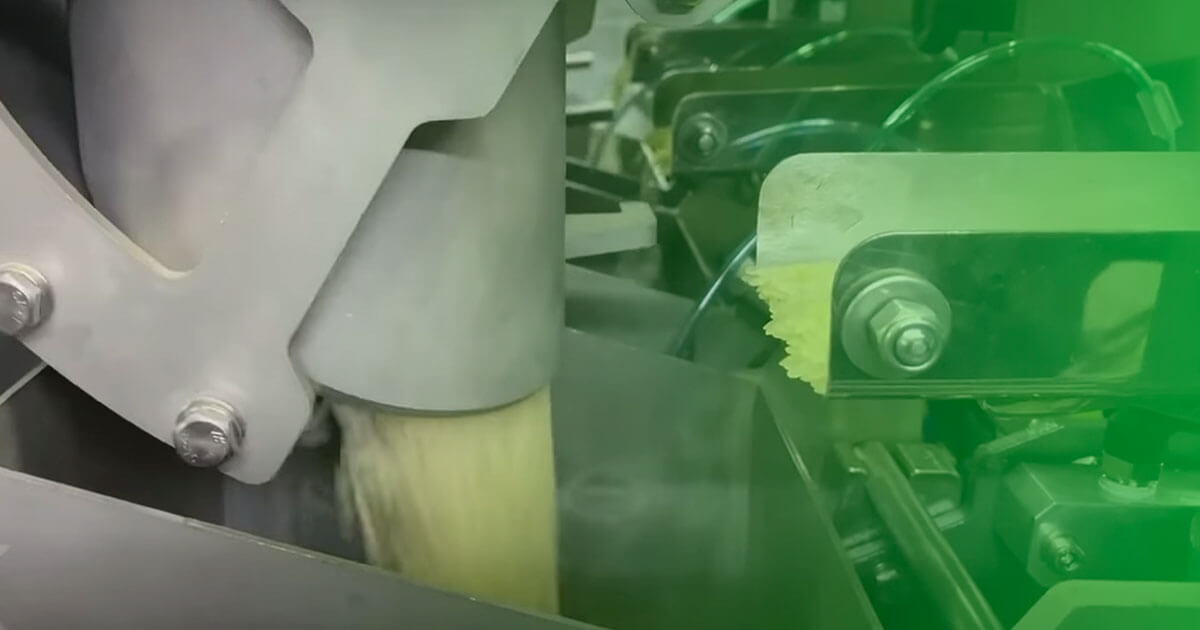
This is a critical point in the industrial process.
As highlighted throughout this article, density determines how much volume a specific mass occupies.
This means that:
- Less dense products occupy more space;
- Compact materials require less volume.
In industry, this directly affects:
- Packaging sizing;
- Adjustment of dosing systems;
- Machine speed and cycle time.
Since equipment operates with defined time and space cycles, any modification requires machine adjustments to maintain efficiency and packaging standards.
This factor must be considered when purchasing a packaging machine and when defining the most appropriate dosing system.
Additionally, in automated lines, variations can generate instability, rework, and loss of productivity.
For this reason, multihead weighers are designed to operate with different product characteristics, maintaining accuracy even at high speeds.
The next step toward greater packaging efficiency
Understanding the calculation is essential, but it is only the beginning. When this knowledge is applied correctly, it results in less waste and greater efficiency in the packaging process.
Consequently, choosing the right container—especially flexible packaging—directly depends on this type of technical analysis.
If you want to deepen this strategy and understand how to improve efficiency in the process, keep reading Indumak’s blog:
You will also enjoy
- Conect





© 2026 - Indumak Indústria de Máquinas Kreis Ltda - Todos os direitos reservados.
